Category: Blog

Your blog category

  • The Floor First: What Actually Moves the Needle After 40

    The Floor First: What Actually Moves the Needle After 40

    workoutplusdiet floor first article image

    Most fitness advice for people over 40 falls into two camps. The first is the “you can still do everything you did at 25” delusion, usually written by people who clearly haven’t tried. The second is the “everything is hard now, just walk a bit and accept it” defeatism, which is somehow even worse. Both miss what actually changes in this decade.

    At 40+, the rules don’t get harder. They get more honest. What you can get away with shrinks. What genuinely works narrows. The good news is that the list of things that actually matter is short — short enough to fit inside a normal life, with a job, a family, and the usual mess of obligations.

    This is what we mean by simple discipline. Not heroic effort. Not 5 AM cold plunges. Not a meticulously color-coded supplement stack. Just a small handful of things that compound when you keep doing them.

    Stop optimizing. Start showing up.

    The fitness internet has trained an entire generation to chase optimization: zone 2 cardio, fasting windows, creatine timing, magnesium glycinate at 9 PM sharp. None of this is wrong, exactly. But it assumes you already have a foundation – and most people over 40 don’t. They have a chaotic mix of “things I used to do,” “things I read about once,” and “things I keep meaning to start.”

    The mistake is trying to optimize before you’ve built the floor. You can’t fine-tune a house that doesn’t have a foundation. So before anything fancy, the goal is to install the four basics that produce 80% of the results. Master those, and you can ignore almost everything else.

    Movement: two strength sessions a week, plus walking

    Here’s the number that should genuinely worry you: after 40, you lose roughly 1% of your muscle mass per year if you don’t actively train against it. By 60, that’s a 20% loss. By 70, it’s the difference between getting up from a chair and not getting up from a chair.

    The minimum that prevents this is two full-body strength sessions per week, 30 to 45 minutes each. That’s it. You don’t need a fancy program. Pick five movements and rotate through them:

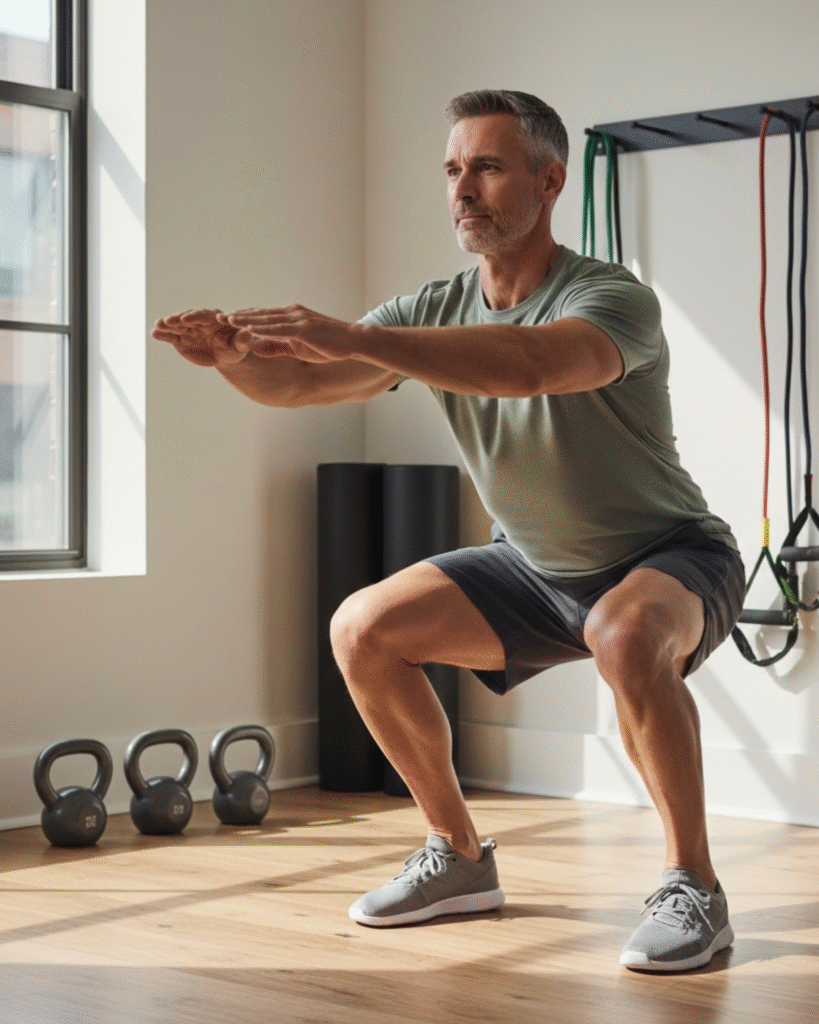
    • A squat pattern (goblet squat, leg press, or barbell back squat)
    • A hinge pattern (Romanian deadlift, kettlebell swing, or hip thrust)
    • A push (push-up, dumbbell press, or overhead press)
    • A pull (row, lat pulldown, or pull-up assisted if needed)
    • A carry or core movement (farmer’s carry, plank, or dead bug)

    Three sets of each, controlled tempo, stopping two reps short of failure. That’s the workout. Twice a week. Forever.

    The other piece is walking. Not running. Not HIIT. Walking. The research is boring and consistent: around 7,000 steps a day is the inflection point where most cardiovascular and metabolic markers meaningfully improve. Past that, you get more benefit, but the curve flattens. So if walking 10,000 steps fits your life, do it. If 7,000 is what you can sustain, that’s fine. Sustainable beats optimal.

    Nutrition: protein first, everything else second

    The single most under-eaten macronutrient at 40+ is protein. By a long way. Most people in this age group are getting maybe 50–70 grams a day, when they should be closer to 100–160. This matters because protein is what your body uses to maintain muscle, and as we just covered, you lose muscle by default at this age.

    A reasonable target is roughly 1 gram of protein per pound of your goal bodyweight, or about 1.6 grams per kilogram. For someone aiming for 160 pounds lean, that’s 160 grams of protein per day. It sounds like a lot. It isn’t, once you organize it.

    The trick is four meals, 30–40 grams of protein each. That’s a structure you can repeat. A standard plate looks like:

    • Breakfast: Two eggs plus Greek yogurt, or a protein shake with milk
    • Lunch: Chicken, fish, or paneer with rice and vegetables
    • Snack: Cottage cheese, tuna, or another shake
    • Dinner: Whatever protein you’d normally eat, but a fist-sized portion

    Real food beats powders when you can manage it, but a shake at 4 PM that gets you to your number is better than no protein and a lot of opinions about purity.

    Beyond protein, the rules are dull but real: eat enough vegetables to fill half your plate at two meals, drink water instead of calorie-bearing drinks, and stop eating two hours before bed. That’s the nutrition floor. Anything more sophisticated is a refinement, not a requirement.

    Mind: sleep, then everything downstream

    If movement and nutrition are the floor, sleep is the foundation under the floor. Almost every issue people complain about at 40+ – low energy, stubborn weight, irritability, slow recovery, brain fog – gets noticeably better with consistent 7-to-8-hour nights. And gets noticeably worse without them.

    Two practical rules carry most of the weight. First, same bedtime, plus or minus 30 minutes. Your body runs on a clock, and it works much better when you stop arguing with it. Second, no caffeine after noon. The half-life of caffeine is about six hours, and it gets longer with age. A 4 PM coffee is still in your system at 10 PM, even if you don’t feel it.

    The other piece, often skipped, is ten unstructured minutes a day. Not meditation if that word makes you flinch. Just ten minutes where you’re not on your phone, not consuming anything, not solving anything. A walk without earbuds. Sitting in your car for a few minutes before walking into the house. The point is to give your nervous system a chance to come down. Stress isn’t the problem. Stress with no recovery is the problem.

    The compound math

    Here’s why these four habits beat anything fancy. Two strength sessions a week is 104 sessions a year. Thirty grams of protein at four meals a day is nearly 44,000 grams over the year. Seven hours of sleep a night is over 2,500 hours of recovery time. None of these numbers are impressive on any given day. Across years, they’re unstoppable.

    This is what consistency actually buys you. Not transformation in 30 days. Transformation across a decade – by which point most of your peers have given up, and you’re just steadily, quietly stronger.

    What to do today

    Don’t try to install all four habits at once. That’s how every January resolution dies by February. Pick the one that’s most broken right now and do only that for the next two weeks.

    If you haven’t strength trained in the last month, start there. Two sessions this week. Five movements each. Done.

    If you train but you’re tired all the time, audit your sleep first. Same bedtime for 14 days. See what changes.

    If you eat reasonably well but you’re losing your shape, count protein for three days. You’ll probably be shocked.

    If you’re already doing all of this – congratulations, you’re already in the top few percent for your age. Now you can start optimizing.

    Discipline isn’t intensity. Discipline is the willingness to do something modest, every day, when nobody’s watching and it doesn’t feel impressive. That’s what works at 40+. It’s what works at 20, and it’s what works at 70. The earlier you make peace with how unglamorous it is, the faster it starts paying off.


  • Why Discipline Fails Without an Inner Shift

    Why Discipline Fails Without an Inner Shift

    whatsapp image 2026 01 30 at 5.08.18 pm

    “If you don’t change your inner image, the outer change doesn’t make any difference.”

    Most people think fitness fails because of poor plans.

    Wrong workout.
    Wrong diet.
    Wrong timing.
    Wrong supplement.

    So they change the outside again.

    New routine.
    New coach.
    New motivation burst.

    And still — the cycle repeats.

    Start strong.
    Slow fade.
    Quiet return to old habits.

    The problem isn’t the plan.
    It’s the person executing it — or more precisely, how that person sees themselves.

    The Real Reason People Fall Off

    Your body follows your identity.

    If, deep inside, you see yourself as:

    • “Not consistent”
    • “Someone who quits after a few weeks”
    • “Disciplined only when motivated”
    • “Not built for long-term effort”

    Then skipping workouts isn’t weakness.

    It’s alignment.

    Your actions are simply matching your inner image.

    Discipline Isn’t a Feeling

    Discipline isn’t about intensity.
    It’s about normalcy.

    What feels normal to you?

    • Training even when energy is low?
    • Eating clean without announcing it?
    • Sticking to basics without excitement?

    Or does discipline still feel like a temporary phase?

    If it feels temporary, your brain will treat it that way.

    And eventually, it will pull you back to what feels familiar.

    Why Motivation Always Runs Out

    Motivation is external.
    Discipline is internal.

    Motivation pushes.
    Identity permits.

    When your actions exceed your self-image, resistance appears:

    • Laziness
    • Excuses
    • “I’ll start again tomorrow”

    Not because the workout is hard —
    but because consistency doesn’t yet match who you believe you are.

    The WorkoutPlusDiet Shift

    At WorkoutPlusDiet, we don’t chase extreme transformations.

    We focus on identity-backed discipline.

    Not: ❌ “I’m trying to be fit”

    But: ✅ “I’m someone who trains, no matter the mood”

    Not: ❌ “I’ll eat clean when life is calm”

    But: ✅ “This is how I eat — even when life is messy”

    Discipline becomes quiet.
    Non-negotiable.
    Boring.

    And that’s why it works.

    A Small Shift That Changes Everything

    Stop asking:
    “How do I stay motivated?”

    Start asking:
    “What would a disciplined person do today, without drama?”

    Then do it once.
    At a level you won’t negotiate away.

    That single act matters more than any intense plan.

    The Principle

    Your body doesn’t change because of effort.
    It changes because of identity.

    Change how you see yourself —
    and discipline stops feeling like a fight.

    WorkoutPlusDiet Takeaways

    • Fitness fails at the identity level, not the routine level
    • Discipline is built through repetition, not motivation
    • Small promises kept rewrite self-image
    • Consistency feels calm, not aggressive
    • Long-term fitness starts when discipline becomes “who you are”

    Closing

    This isn’t about pushing harder.

    It’s about upgrading the inner image you’re operating from.

    Once that shifts,
    discipline becomes natural —
    and results follow without noise.

    No hype.
    No ego.
    Just identity-aligned discipline.

  • WorkoutPlusDiet: The Simple System That Helps Men 40+ Get Strong, Lean & Energized Without Extreme Diets or Endless Cardio

    WorkoutPlusDiet: The Simple System That Helps Men 40+ Get Strong, Lean & Energized Without Extreme Diets or Endless Cardio

    The Problem Nobody Talks About After 40

    Problem nobody talks after 40

    After 40, something quietly changes.

    You eat the same food.
    You work just as hard.
    You even try to “exercise more” but the body doesn’t respond the same way.

    Fat creeps in.
    Energy drops.
    Recovery slows.
    Motivation becomes fragile.

    Most men blame age.

    But the real problem is this:

    The body after 40 needs a different system – not more effort.

    That’s where WorkoutPlusDiet was born.

    What WorkoutPlusDiet Really Means

    WorkoutPlusDiet is not a program.

    It’s a way of living built on three simple principles:

    WorkoutPlusDiet02 Traning Function

    1. Train for function, not ego
    Build strength that helps your joints, posture, heart, metabolism and daily life.

    2. Eat for nourishment, not punishment
    No starvation. No extremes. Just food that fuels recovery, hormones and energy.

    3. Build habits that survive busy life
    Because consistency beats intensity — every single time.

    Why Most Fitness Plans Fail After 40

    Most plans are designed for:

    • 20-year-olds

    • influencers

    • professional athletes

    Not for working fathers.
    Not for stressed professionals.
    Not for real bodies.

    After 40, your body cares about:

    • recovery

    • sleep

    • inflammation

    • joint health

    • hormone balance

    Ignore these and no program will last.

    The WorkoutPlusDiet Method

    untitled design (3)
    untitled design (5)

    Here’s how the system works:

    Smart Strength Training

    3–5 sessions per week
    Focus on compound movements, mobility, core and posture.

    Practical Nutrition

    High-protein, anti-inflammatory foods.
    No crash dieting. No food fear.

    Recovery & Hormone Support

    Sleep, hydration, walking, sunlight, stress control.

    Habit Engineering

    Tiny daily actions that build unstoppable momentum.

    What Changes When You Follow This System

    ✔ steady fat loss
    ✔ improved energy
    ✔ stronger joints
    ✔ clearer mind
    ✔ better sleep
    ✔ renewed confidence

    Not in 7 days.
    Not in 14 days.

    But for life.

    This Is Not About Looking Young

    It’s about feeling capable again.

    Climbing stairs without pain.
    Playing with your children without breathlessness.
    Waking up without stiffness.
    Walking into a room with quiet confidence.

    A Message From Me

    I built WorkoutPlusDiet because I saw too many good men slowly losing their health while chasing success.

    Your body is your first business partner.

    When it collapses, everything else follows.

    So we don’t chase shortcuts here.
    We build systems.

    If You’re 40+ And Ready To Begin

    Start with this:

    1. Walk 7–10k steps daily

    2. Lift weights 3–4 times a week

    3. Eat protein at every meal

    4. Sleep 7–8 hours

    5. Drink water like it matters (because it does)

    Do this for 30 days.

    Your body will respond.

    Your mind will follow.

    Your life will change.

    WorkoutPlusDiet
    Strong body. Calm mind. Sustainable life.

  • Rediscovering Strength: The Power of Simple Bodyweight Moves After 40

    Rediscovering Strength: The Power of Simple Bodyweight Moves After 40

    the power of simple moves workoutplusdiet

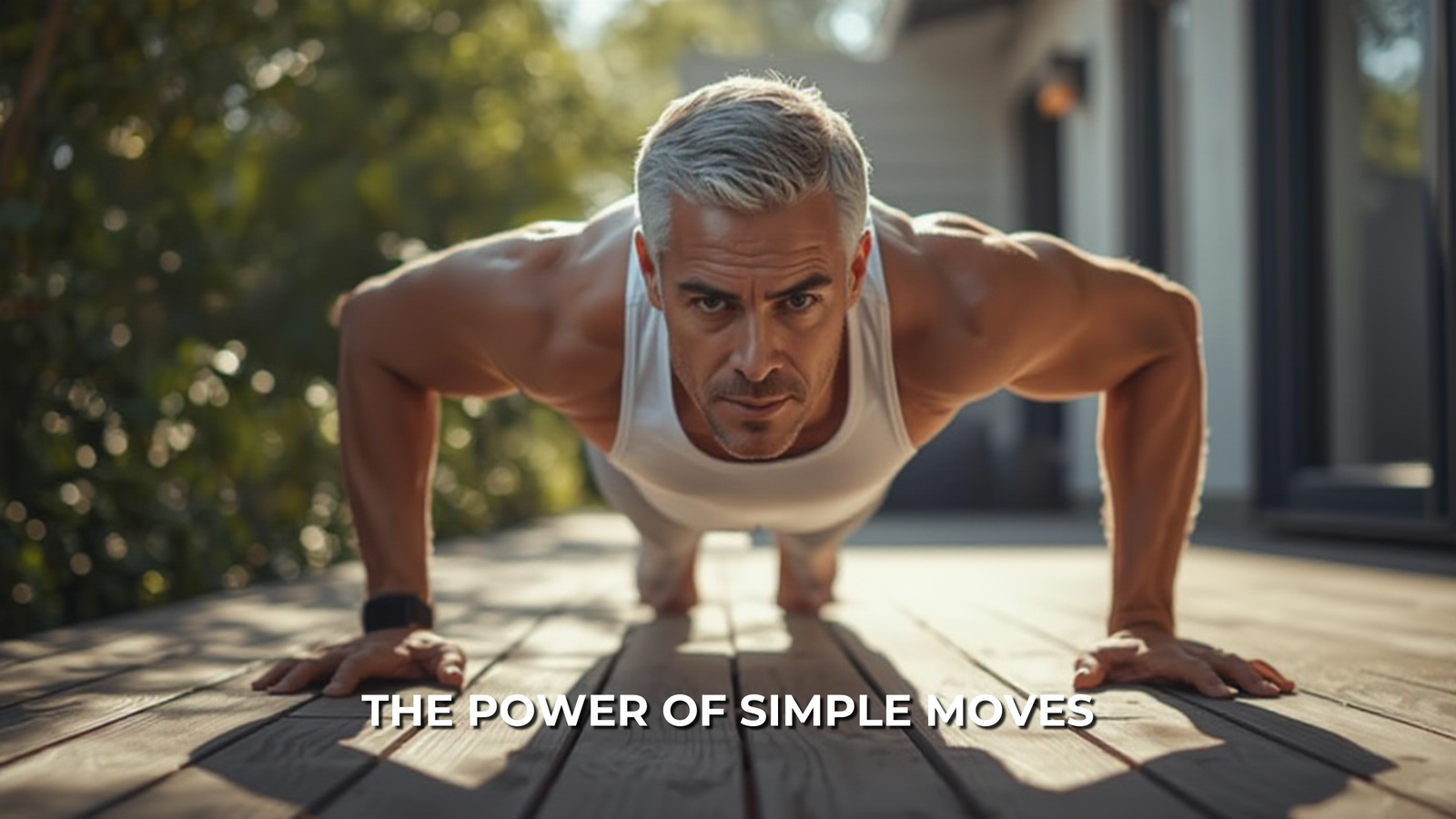
    As we cross 40, bodyweight exercises are an excellent way to maintain and even rebuild strength without the need for expensive gym memberships or equipment. Try starting with sets of push-ups (either standard or incline against a wall), sit-ups to wake up your core, and pull-ups if you have access to a bar or sturdy beam.

    dumbbell lifts workoutplusdiet

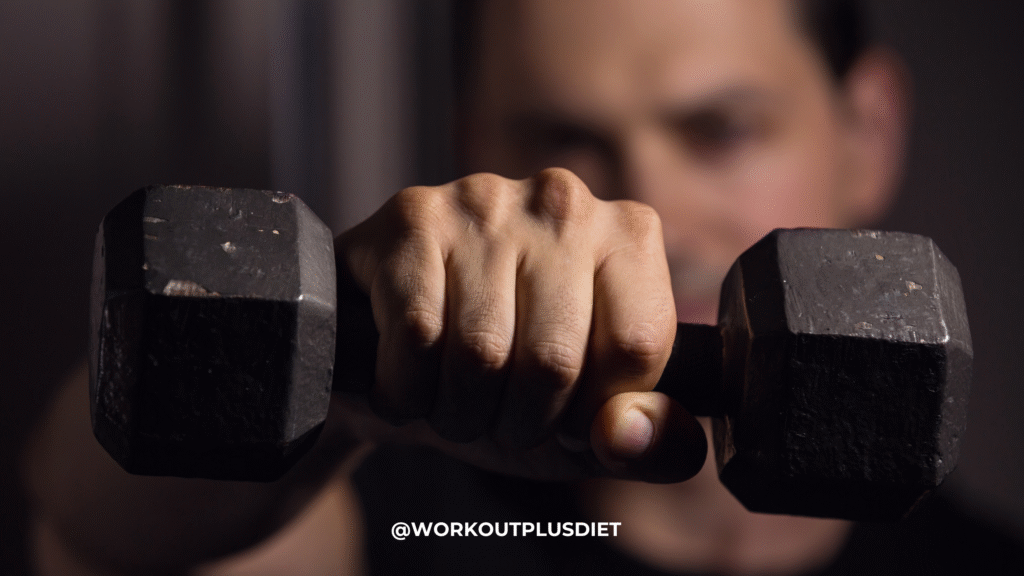
    Combine these with dumbbell lifts targeting the shoulders and upper chest. Begin with light weights and focus on form to protect joints. Add squats and lunges for functional strength and stability.

    diet food workoutplusdiet

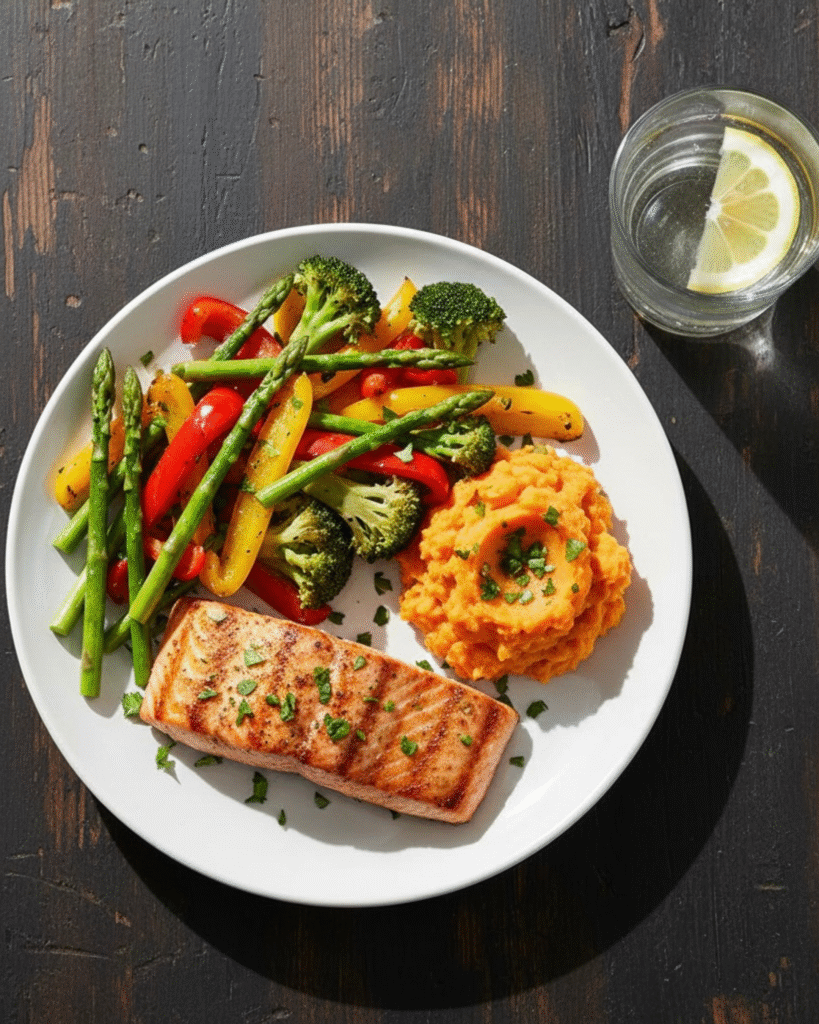
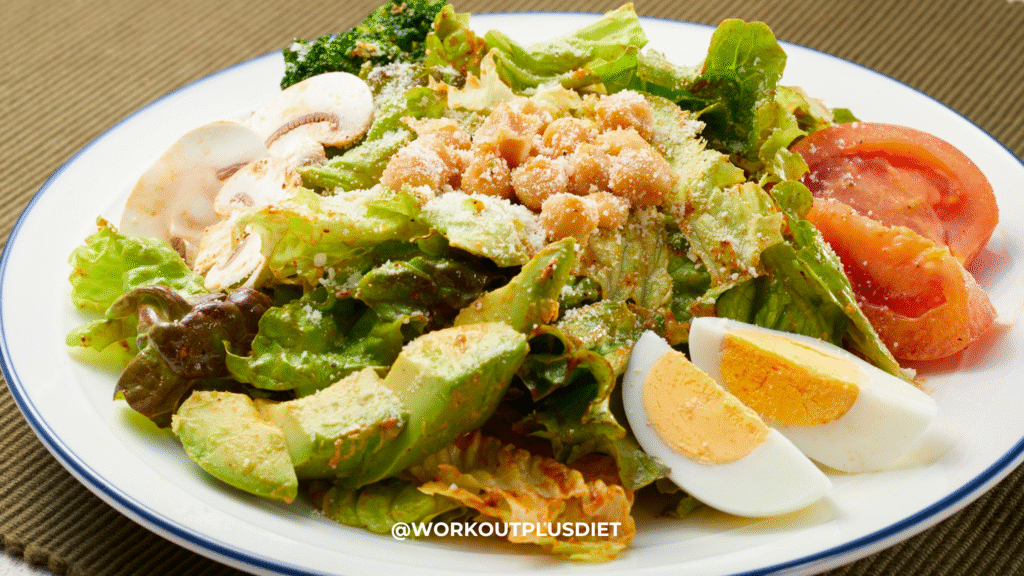
    A protein-rich, balanced diet fuels muscle recovery. Prioritize lean meats, eggs, legumes, and nuts, and drink plenty of water. Top it off with 7–8 hours of sleep to allow the body to repair and optimize hormone balance.